
Mold Remediation in Canton, OH
Mold needs only a few things to grow: moisture, a food source such as drywall paper or wood, and time. After a leak, flood, or poorly dried water loss, it can show up as dark spots on walls, a musty smell in the basement, or fuzzy patches on stored belongings. Canton Restoration Pro handles mold remediation for Canton homes and businesses by containing the area, removing affected materials, cleaning surfaces, and addressing the moisture that let it grow.
If you suspect mold, call us for a free estimate. We will tell you honestly what we see and what we recommend.
- 24/7 Emergency Calls
- Free Estimates
- Licensed and Insured
Why Mold Appears After Water Damage
Slow or Incomplete Drying
Damp materials left for a few days can support growth. Wet drywall, carpet padding, and insulation are common starting points.
Hidden Moisture
Leaks inside walls, above ceilings, and under floors may go unnoticed for weeks. Mold can grow where nobody looks.
Humidity and Poor Ventilation
Basements, bathrooms, laundry rooms, and attics hold humid air. Without airflow, condensation and dampness can feed mold.
Repeated Small Leaks
A drip under a sink or around a window may seem harmless, yet it can keep a patch of material damp for months.
Signs You May Have Mold
- Dark, fuzzy, or speckled patches on walls, ceilings, or baseboards
- A stale, earthy odor that comes back after you clean
- Peeling paint or warped drywall near a past leak
- Staining on ceiling tiles or in closets and corners
- Allergy-like symptoms that seem worse indoors
Odor and discoloration are clues, not proof. Mold testing and visual inspection help decide what is present.
Mold Remediation Near You in Canton, OH 44710
Canton ZIP code 44710, along with the nearby ZIP codes of 44709, 44708, 44718, and 44721, is within our service area for mold remediation. We also work across 44702 through 44706, 44707, 44714, and 44720. Tell us your street address and where you see or smell mold, and we will explain the next step.
How We Remediate Mold
Inspection and Moisture Source
We look for the water that fed the mold and measure moisture in surrounding materials. Without addressing that moisture, mold tends to return.
Containment
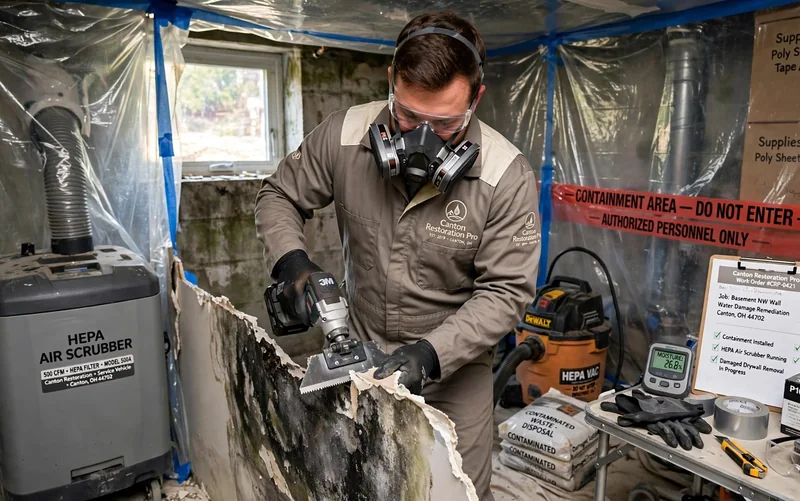
Plastic sheeting, tape, and negative air machines help keep spores from spreading to clean parts of the building during work.
Removal of Affected Materials
Drywall, insulation, and other soft materials carrying heavy growth come out in sealed bags, while framing and other solid surfaces that can be saved are cleaned in place.
HEPA Filtration and Cleaning
HEPA vacuums and air scrubbers capture fine particles, and surfaces are cleaned to remove residue.
Drying and Final Check
The area is dried to a normal moisture level, and we confirm the job is ready for repairs.
What We Do and Do Not Do
What We Do
Remove moldy materials, clean affected surfaces, contain work areas, and dry the structure.
What We Do Not Do
We do not replace drywall, repaint, or fix plumbing and roof leaks. Those repairs belong to other trades once the area is clean and dry.
What About Testing?
Air or surface tests may be useful in some cases. Ask us whether testing makes sense for your situation, and consider using an independent tester for confirmation.
Protecting Yourself While You Wait
- Avoid touching or disturbing the mold.
- Stay out of the affected room if you can.
- Keep children, pets, and anyone with breathing problems away.
- Do not run fans that spread spores to other rooms.
- Do not paint over mold or cover it with caulk. It is still there.
Mold Rules in Ohio
Ohio does not currently license mold remediation contractors at the state level, so it is wise to ask any company for its training, certifications, insurance, and a written scope of work. We are glad to share ours. Insurance may cover mold only in certain situations, so review your policy. Our structural drying and dehumidification page shows how we prevent mold after a leak, and the frequently asked questions cover more.