
Structural Drying and Dehumidification in Canton, OH
A floor can look dry while the subfloor beneath it still holds water, and a wall can feel dry to the touch while insulation inside it stays soaked. Skipping proper drying is how a one-time leak turns into warped flooring, odors, and mold weeks later. Canton Restoration Pro dries wet structures in Canton homes and businesses with measured, monitored equipment instead of guesswork.
Drying is the part of restoration that you cannot see, so we show you the numbers. Estimates are free.
- 24/7 Emergency Calls
- Free Estimates
- Licensed and Insured
Why a Fan and an Open Window Are Not Enough
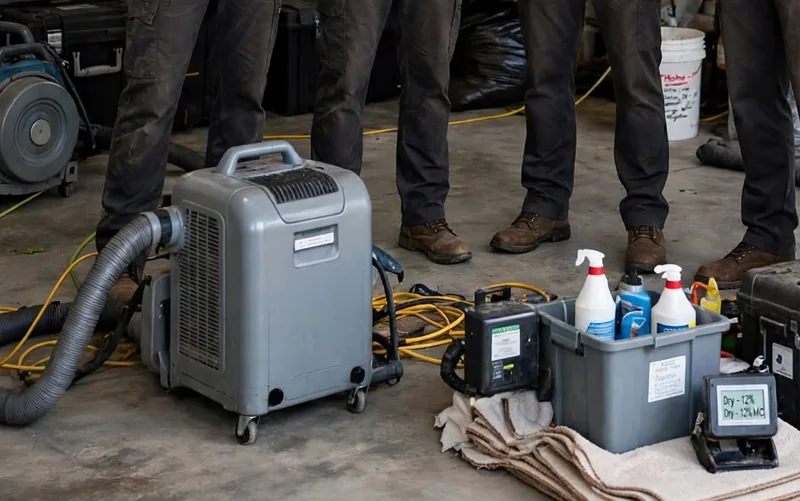
Fresh air alone cannot pull water out of framing, concrete, or insulation. Real drying needs three things working together: airflow across wet surfaces, dehumidification to remove the moisture those surfaces release, and measurement to confirm the work is done. Without the second and third, moisture from drying walls simply moves into the air and settles in other places, including the ceiling, closets, and furniture.
The Equipment We Use
Air Movers
Air movers push a steady stream of air across wet surfaces and into wall cavities, which speeds up evaporation from floors, walls, and ceilings.
Dehumidifiers
Dehumidifiers condense the moisture that has evaporated into the room and drain it away. Dry air gives the wet materials somewhere to send their water.
Injection and Cavity Drying Systems
Where water sits inside walls or under floors, dry air can be directed into cavities through small openings, drying the space without tearing out sound materials.
Moisture Meters and Thermal Imaging
Meters give numbers for wood, drywall, and concrete. A thermal camera highlights cool, wet areas so we know where to focus the equipment.
Structural Drying and Dehumidification Near You in Canton, OH 44705
If you are in Canton ZIP code 44705 or any of the ZIP codes close to it, including 44707, 44708, 44709, and 44710, we can bring drying equipment to the wet part of your building. Give us the street address and the rooms involved and we will explain how long drying commonly takes for situations like yours, without promising a fixed number.
How Our Drying Process Works
Moisture Mapping
We record baseline readings in the wet areas and in dry areas of the same material. The dry readings become our target.
Equipment Placement
Air movers and dehumidifiers are placed according to the size of the room, the materials, and the amount of water involved, not by a fixed formula.
Daily Monitoring
We return to take new readings, adjust equipment, and record progress. Some areas dry faster than others, and the plan changes with the data.
Confirming Dry Standard
Drying is complete when the wet materials read the same as the dry reference. Equipment comes out only after that confirmation.
What Can Be Dried in Place
Hardwood and Subfloors
Specialized drying systems and careful monitoring can sometimes save floors that would otherwise be replaced. Not every floor responds, and we will tell you honestly if one does not.
Drywall and Plaster
Some wall materials dry in place. Others, especially drywall that has softened or been soaked by dirty water, are better removed and replaced.
Concrete and Block
Basement slabs and block walls hold water for a long time. Dehumidification and airflow are the main tools, and patience matters.
Insulation and Framing
Wet insulation holds water against studs. We either dry it through cavity systems or remove it when it cannot be dried, then dry the framing.
Warning Signs That Drying Was Not Finished
- A musty odor that appears after the floor seems dry
- Baseboards or trim that cup or separate from the wall
- Paint that bubbles or peels weeks after a leak
- Hardwood boards that crown or gap
- Higher than normal indoor humidity that does not come down
What Happens After Drying
When readings match the dry standard, equipment comes out and you can plan repairs. For water that has led to mold, our mold remediation page explains what follows. If drying starts after a flood or a pipe break, the best first read is water extraction and removal. See our frequently asked questions for common concerns.