
Water Extraction and Removal in Canton, OH
Standing water is only the visible part of the problem. Below it, carpet fibers, padding, subfloor seams, and baseboards are already drawing moisture upward and sideways. Canton Restoration Pro removes standing water and the water held inside floors and furnishings for Canton homes, apartments, and businesses, so drying can start on a building that is not still soaking.
If water is on the floor right now, call before you reach for a mop. We will tell you what is safe to do while the crew gets ready.
- 24/7 Emergency Calls
- Free Estimates
- Licensed and Insured
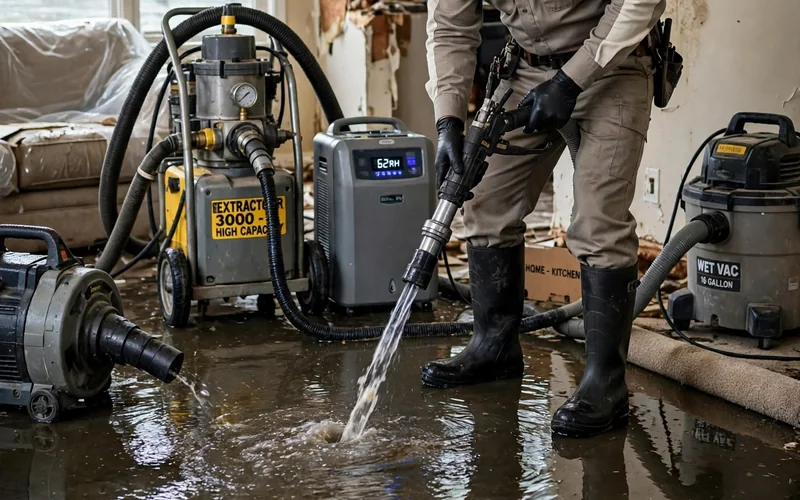
The Equipment Behind Fast Water Removal
Pumps for Deep Water
When water is deep enough to cover the floor, submersible and transfer pumps move large volumes out through hoses to a safe discharge point.
Extractors and Wands
Once the surface water is gone, powerful extractors and extraction wands pull water out of carpet, padding, and hard flooring where pumps cannot reach.
Wet-Dry Vacuums for Detail Work
Stairs, corners, and spaces around cabinets and appliances need smaller tools. Wet-dry vacuums clear the water that larger machines miss.
Moisture Meters and Thermal Imaging
Removal does not end when the floor looks dry. Meters and a thermal camera show water still held in walls, subfloors, and cavities so we can decide what happens next.
Where the Water Hides After the Standing Water Is Gone
- Under carpet and padding, where water pools against the subfloor
- Inside baseboards and the bottom of drywall, where it wicks upward
- Beneath hardwood, laminate, and vinyl, where seams trap moisture
- Behind cabinets and toe kicks, where the air barely moves
- Within insulation, where wet material holds water against framing
Water Extraction and Removal Near You in Canton, OH 44708
Property owners in Canton ZIP code 44708 and the nearby ZIP codes of 44718, 44709, 44720, and 44721 can reach us for extraction and removal, along with the rest of our service area from 44702 through 44710. When you call, tell us your street address and how deep the water is, and we will describe what happens next.
How Our Extraction and Removal Works
Safety and Source Check
Before any pump runs, we check for electrical hazards and make sure the source of the water has been stopped or is being handled.
Bulk Water Removal
Pumps clear standing water first. Getting the volume out early reduces how much the materials absorb.
Deep Extraction From Soaked Materials
Extractors work across carpet and hard floors to pull out water that has soaked in. We pay particular attention to padding, edges, and the spots near walls.
Moisture Mapping
Meters and thermal imaging show which areas remain wet. This guides what can be dried in place and what should be removed.
Handoff to Drying
When the extraction is complete, drying equipment takes over. Read more about structural drying and dehumidification, the stage that follows.
What We Remove and What We Try to Save
Carpet and Padding
Carpet from a clean-water loss can often be saved if the water is removed quickly. Padding is frequently replaced because it holds water and dries slowly.
Hardwood and Laminate Flooring
Solid wood and laminate react differently. We use meters to judge whether boards can dry in place or whether lifting some boards will help.
Drywall and Baseboards
Drywall that has wicked water can sag or crumble. Where it is wet only at the bottom edge, a cut along the wall may let us dry the cavity and keep the rest.
Contents and Furniture
We help move wet items out of the water's reach and advise on what can be dried, cleaned, or must be discarded.
Common Mistakes After a Water Event
- Running a household vacuum on a wet floor
- Waiting a day to see whether the floor "dries on its own"
- Walking on wet carpet and spreading dirt and moisture
- Turning up the heat to speed drying without removing the water first
- Throwing away damaged items before photographing them
Questions Worth Asking Any Water Removal Company
Ask what equipment they will use, how they will measure moisture, whether they work to an industry standard such as ANSI/IICRC S500, and how they document the job. We are glad to answer each of these. Learn more about our approach on our emergency water damage restoration page, or read the frequently asked questions.